Part 4 of the Live Data Publishing Framework (LDP Framework) Series
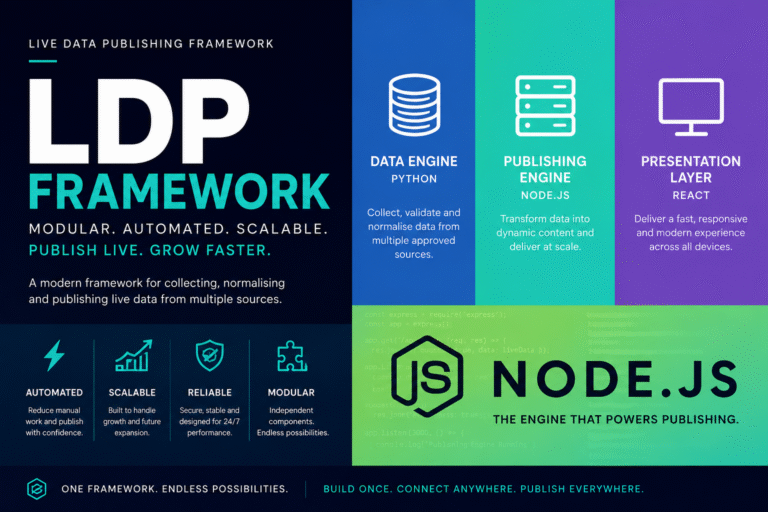
In the previous articles, I introduced the Live Data Publishing Framework (LDP Framework), explained how the Data Engine prepares structured information using Python, and explored how the Publishing Engine uses Node.js to organise and deliver that data efficiently.
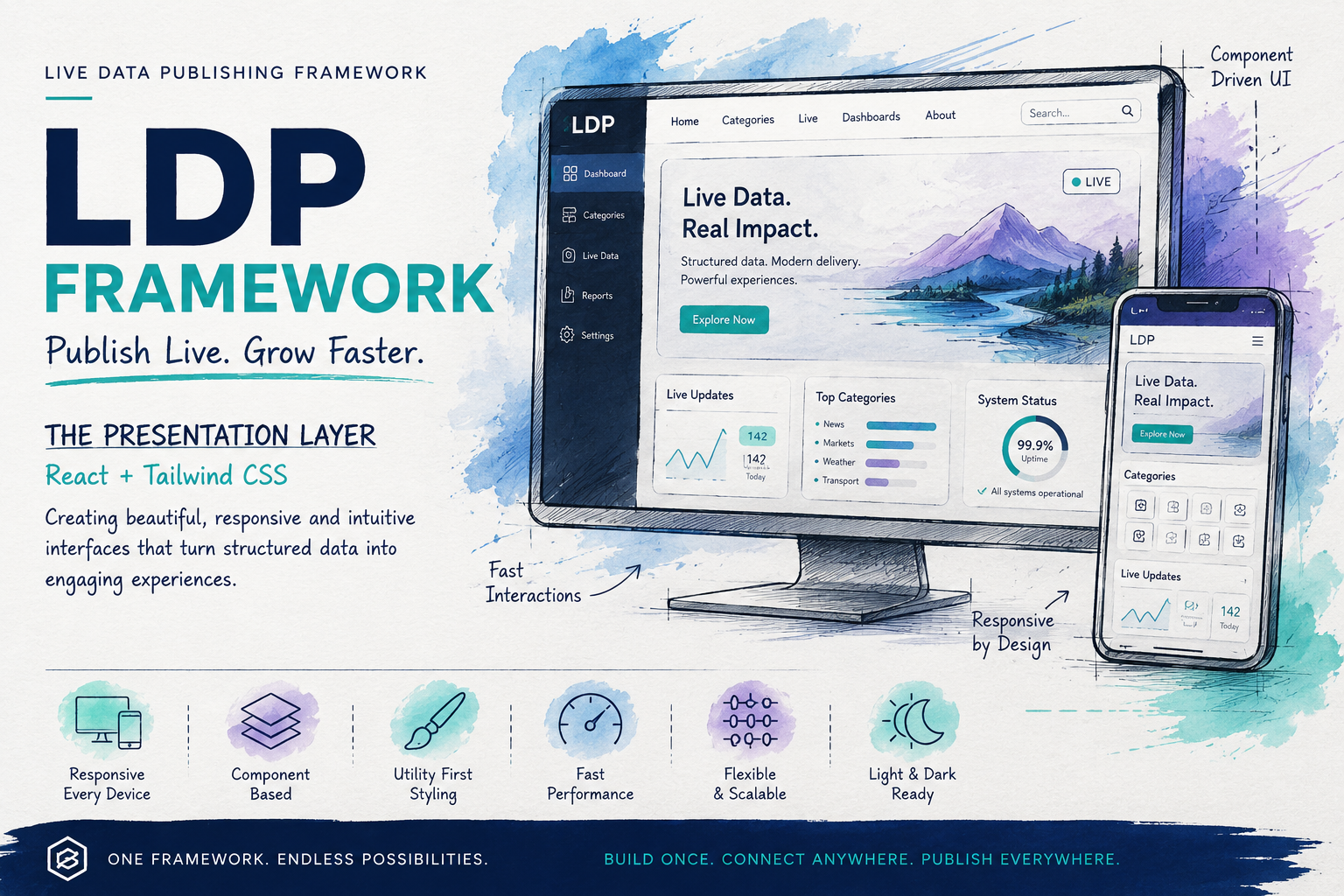
The final piece of the core architecture is the Presentation Layer.
This is the part of the framework that visitors interact with directly.
Its purpose is not simply to make a website attractive. It is to transform structured information into an interface that is intuitive, responsive and easy to navigate.
Separating Presentation from Logic
One of the key principles of the LDP Framework is the separation of responsibilities.
The Data Engine collects information.
The Publishing Engine processes and organises it.
The Presentation Layer focuses exclusively on how that information is displayed.
This separation allows each layer to evolve independently without introducing unnecessary complexity into the rest of the system.
Why React?
Modern websites are expected to feel fast and responsive.
Visitors expect content to update smoothly, filters to respond instantly and dashboards to display information without constantly reloading entire pages.
React has become one of the most widely adopted frontend libraries because it allows interfaces to be built from reusable components.
Instead of rebuilding an entire page whenever information changes, React updates only the components that require refreshing.
For data-driven publishing platforms, this creates a smoother and more responsive user experience.
Why Tailwind CSS?
A flexible frontend also requires a flexible styling system.
Tailwind CSS provides a utility-first approach that allows interfaces to be developed quickly while maintaining visual consistency across the framework.
Rather than relying on large collections of custom stylesheets, components can be assembled from reusable design utilities.
This approach simplifies long-term maintenance while helping preserve a consistent visual identity.
Building with Components
Every element within the Presentation Layer can be viewed as an independent component.
Examples include:
- Navigation menus
- Search panels
- Content cards
- Live information panels
- Dashboard widgets
- Category grids
- User controls
- Responsive layouts
Because each component performs a specific function, the interface can continue to grow without becoming difficult to manage.
Responsive by Design
Visitors access modern websites from desktop computers, tablets and mobile devices.
The Presentation Layer is designed to adapt naturally to different screen sizes without requiring separate versions of the application.
Layouts, navigation and content organisation should remain consistent regardless of the device being used.
Preparing for Future Features
Although the initial implementation of the LDP Framework focuses on delivering structured publishing experiences, the Presentation Layer has been designed with future expansion in mind.
Interactive dashboards, personalised views, configurable layouts and additional visualisation components can all be introduced without requiring fundamental changes to the underlying architecture.
This flexibility is one of the key advantages of maintaining a clear separation between presentation and application logic.
A Framework, Not a Theme
It is important to distinguish the Presentation Layer from a traditional website theme.
Themes focus primarily on appearance.
The Presentation Layer focuses on user experience, component architecture and the efficient presentation of structured information.
Visual design can evolve over time while the underlying framework remains unchanged.
Looking Ahead
With the core architecture now established, the next stage of the LDP Framework explores one of its most important design principles:
Modularity.
In the next article, I will explain why independent modules make the framework easier to develop, extend and maintain as new data sources and publishing features are introduced.
LDP Framework Status
Framework: Live Data Publishing Framework (LDP Framework)
Current Module: Presentation Layer
Primary Technologies: React & Tailwind CSS
Development Phase: Frontend Architecture
Next Article: Why Modular Architecture Matters